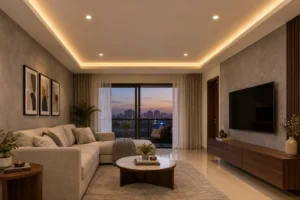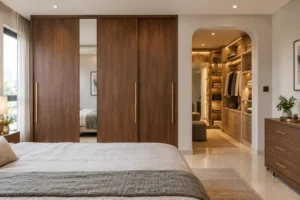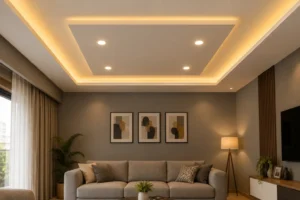
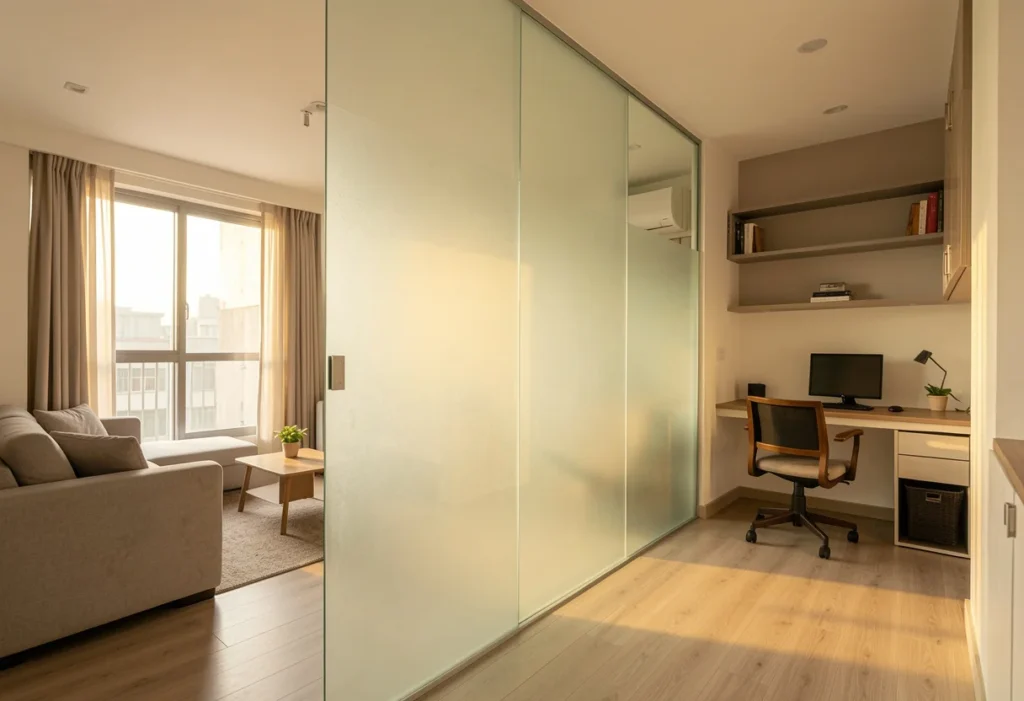
I get this question almost every week at Blue Interiors: “Can I divide this room without making it feel like a box?” Nine times out of ten, frosted glass is the answer.
Frosted glass uses in interior spaces in six practical ways: bathroom doors, kitchen cabinets, living room partitions, bedroom wardrobe panels, study dividers, and balcony enclosures. It works through acid etching or sandblasting, both of which scatter light instead of blocking it. You keep the daylight. You lose the visibility into private spaces. For a 1,100 to 1,500 sq ft Bangalore apartment, where every solid wall shrinks how a home feels, that is a genuinely useful thing to understand before you commit to any partition material.
We have done this in over 200 homes. What follows is what we actually tell clients, not a sanitised brochure version of it.
What Is Frosted Glass?
Frosted glass is plain glass treated at the surface so it scatters light rather than transmitting it cleanly. Two methods are used almost universally.
Acid etching uses hydrofluoric acid to dissolve the glass surface uniformly. The result is smooth under your palm and diffuses light with more consistency across the panel.
Sandblasting fires fine abrasive grit under pressure. It’s rougher to the touch and catches fingerprints less, but the micro-texture grips soap scum in bathrooms over time.
We steer bathroom clients toward acid-etched glass for exactly that reason. A few years back, a client in Koramangala called us back six months after handover, frustrated that her shower panel looked dull no matter how she cleaned it. We had used sandblasted glass on that project. That was a lesson we didn’t need to repeat.

Frosted vs Clear vs Lacquered vs Tinted Glass
This is the comparison that causes the most confusion in a first consultation, so let’s be direct about it.
| Glass Type | Light Transmission | Privacy | Best For |
| Clear glass | Full | None | Open partitions, display units |
| Frosted glass | High, diffused | High | Bathrooms, wardrobe panels, dividers |
| Lacquered glass | None, fully opaque | Full | Kitchen backsplash, accent walls |
| Tinted glass | Medium | Low to medium | Balcony enclosures, sun control |
Lacquered glass is painted on the reverse and blocks light completely while adding solid colour. If you want a calm kitchen backsplash, grey lacquered glass texture does that. If you want drama on a TV unit backdrop, black lacquered glass texture is the choice. But these are not competing with frosted glass. They solve completely different problems. If you are leaning toward a colour-forward finish rather than a light-diffusing one, our detailed grey lacquered glass texture specification guide covers how that material behaves in Indian kitchens and living rooms.

Not sure which glass fits your room? Send us a photo on WhatsApp. We’ll give you a straight answer, not a sales call.
Ask Blue Interiors on WhatsApp
Why It Suits Indian Apartments
Bangalore apartments in HSR Layout, Sarjapur Road, and Whitefield average 1,100 to 1,500 sq ft for a 3BHK. Add a brick partition and the rooms don’t lose square footage on paper, but they feel smaller immediately. A frosted glass partition keeps light moving through the space, which is why it reads as open even when it’s fully dividing two areas.
Vastu comes up in most consultations. Frosted glass between a kitchen and dining zone, or between a home office and a living room, generally clears Vastu review more easily than solid walls. The logic from most consultants is that it doesn’t fully obstruct energy flow. We never advise on Vastu ourselves, but we always build in time to loop in the client’s own consultant before finalising a partition layout.

Room-by-Room Uses
Bathroom doors and shower enclosures. The most common install we do. For shower doors, we specify 8mm to 10mm tempered glass. Panels thinner than 8mm flex slightly every time the door opens and closes, and over about 18 months that stress causes cracking near the hinges. The fix costs more than the saving was worth.
Kitchen cabinet fronts. Frosted glass on upper cabinet shutters gives you the lightness of a glass kitchen without the pressure of keeping crockery arranged perfectly at all times. The board substrate behind the glass matters here too. An MDF frame in a high-humidity kitchen will swell and distort the glass alignment within a year. Our full breakdown of MDF board vs plywood for cabinet substrates is worth reading before you sign off on any kitchen specification.
Living room partitions. A frosted glass divider between a living area and a study nook or puja corner keeps both zones sharing the same light source. It reads as a single connected space rather than two separate rooms.
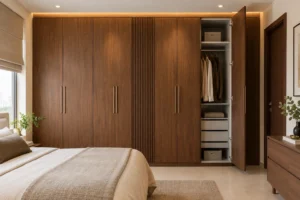
Bedroom wardrobe panels. Frosted glass inserts in wardrobe shutters break up a flat laminate surface and handle minor scuffs more gracefully than gloss laminate, which shows every fingerprint.
Study room dividers. This request tripled after 2020. A frosted divider borrows daylight from the living room while muting visual distraction during video calls.
Balcony enclosures. Frosted glass cuts wind and dust while keeping the space bright. For privacy from neighbouring towers at close distance, we usually recommend pairing it with a tinted or laminated layer underneath. Frosted alone, at short range, gives only partial visual obstruction.

Planning a glass partition, bathroom door, or modular kitchen? Look at how we’ve done it across real Bangalore projects before deciding on a material.
Finishes and Patterns
Beyond plain frosted, you can specify linear or fluted textures for an architectural look, geometric etched motifs, or a gradient frost that transitions from clear at the top to opaque at the bottom. This partial frost option is useful for partitions where you want ceiling-height light flow but eye-level privacy.
These finish combinations pair well with wood wall panels interior treatments for warmth, or a bamboo wall panel as a natural accent on the opposite wall. We used the frosted glass and bamboo panel combination in a Whitefield villa last year. The contrast between the diffused glass and the bamboo grain made the hallway feel considered rather than clinical.

Frameless vs Framed
Frameless installs, using spider fittings or U-channel systems, look more premium but cost 20 to 30 percent more and demand very precise site measurements. If the site isn’t perfectly plumb and square, the glass won’t sit flush and the gaps show. Framed installs with aluminium or wood are more forgiving during execution and cheaper to fix if a panel ever cracks. For rental properties or tighter budgets, framed is the practical choice almost every time. You can browse the full range of both approaches across our completed projects on the Blue Interiors services page.

Cost in Bangalore, 2025
| Type | Price Range per sq ft |
| Frosted film on existing glass | Rs 60 to 120 |
| Sandblasted glass, new panel | Rs 150 to 280 |
| Acid-etched glass | Rs 220 to 400 |
| Custom patterned frosted glass | Rs 350 and above |
Glass thickness, tempering, and supplier margins all shift these numbers. Use this table as a rough filter, not a final quote. A site visit gives a far more honest number for your specific layout.
Medium-Density Fiberboard (MDF) is a popular material for modular furniture, wall panels, and cabinetry.

Cleaning and Maintenance
A microfiber cloth with diluted glass cleaner handles almost all routine upkeep. Avoid abrasive scrubbers on sandblasted finishes. If you’ve installed frosted film rather than etched glass, keep harsh chemicals away from the edges where the film tends to lift first. In bathrooms, drying panels after each use prevents hard water spotting from building up across the texture.
Expert Tip from the Blue Interiors Design Team: Get written confirmation from your fabricator that the glass is tempered before it’s installed in any bathroom or partition. Non-tempered frosted glass in a high-traffic space is a safety risk. We’ve replaced panels in two client homes where this wasn’t checked. The rework cost more than tempering the glass would have cost originally.

A Real Blue Interiors Project
A client in Sarjapur came to us with a specific brief: she wanted to separate her kids’ study corner from the living room without making the apartment feel cut in half. She had two children below ten, so full opacity was not an option either. She needed to glance in without walking across the flat.
We installed a frameless frosted glass partition, floor to ceiling, and left a 4-inch clear strip at seated eye level so she could check in without the kids realising the partition was also supervision. The frosted sections covered everything above and below that strip. Light moved freely through the whole living area. The study didn’t feel enclosed.
She told us six months later it was the detail she showed every visitor.
More work like this is documented on our project portfolio page.
According to a National Glass Association industry report, residential demand for privacy and decorative glass applications has increased steadily as open-plan apartments become the standard layout in Indian metro housing. That maps directly onto what we see coming through our consultation bookings in Bangalore every month.

FAQ
What is frosted glass used for in interior design?
Bathroom doors, shower enclosures, kitchen cabinet fronts, living room partitions, bedroom wardrobe panels, and balcony enclosures. Anywhere you need privacy without closing off natural light.
Is frosted glass good for bathroom doors in Indian homes?
Yes. It doesn’t warp from humidity the way wood does, doesn’t need replacing like curtains, and keeps bathrooms feeling bright rather than closed in.
What is the cost of frosted glass per sq ft in Bangalore?
Frosted film starts at Rs 60 to 120 per sq ft. New sandblasted or acid-etched panels run Rs 150 to 400 per sq ft depending on thickness and finish type.
Can frosted glass be used for kitchen partitions?
Yes, for both cabinet shutters and full partitions between a kitchen and dining area. Works especially well in open-plan apartments.
How do you clean frosted glass without damaging the finish?
Microfiber cloth and a diluted glass cleaner. No abrasive sponges on sandblasted glass, and dry bathroom panels after use to prevent water spotting.
Talk to Us Before You Finalise
You’ve done the research. Now the question is whether frosted glass actually works for your floor plan, your privacy needs, and your renovation budget. We’ll give you a straight answer, free, no pressure.
Book Your Free Design Consultation with Blue Interiors
Author Bio
This article was written by the design team at Blue Interiors, a Bangalore-based interior design firm with 15 years of experience and over 5,000 homes delivered across the city. Our team works directly with fabricators, site supervisors, and structural consultants on every project we take on. The cost figures, material recommendations, and maintenance advice in this article come from site work and client feedback, not published catalogues or generic sourcing guides.