Quick Answer: Pooja room door designs in wood really come down to three choices: solid teak, Sheesham, or MDF with a wood veneer on top. Teak costs the most upfront, but it barely needs attention for 20 years. Sheesham runs about 20 to 30 percent cheaper and carves almost as well, though the polish wears off sooner. Veneer is fine for a tight budget as long as it stays away from direct diya heat. If you want something warm-toned, without glass or metal in the mix, wood is still the safer bet for a room you don’t plan to touch again for a decade.
Key Takeaways:
- Pooja room door designs in wood come down to three real material choices: teak, Sheesham, and veneer
- Teak costs more upfront but needs the least maintenance over 20 years
- Finish matters as much as species. Matte oil finishes outlast glossy lacquer near sun-facing doors
- Get timber moisture content checked before installation, not after
- Match the wood choice to your room’s actual sun and humidity exposure, not just the catalog photo
A carpenter I’ve worked with for years once said something that stuck with me. The kitchen shutter gets swapped out every ten years or so. The pooja door almost never does. That’s the whole reason wood pooja room design decisions deserve more thought than most people give them. Homeowners pick a door off a catalog photo, the carpenter carves it, everyone moves on. Two years later the finish has gone dull or the panel’s started warping near a window, and by then it’s too late to change anything without redoing the whole thing.
This isn’t another rundown of the nine pooja door styles you’ve probably scrolled past already. We’ve covered the full range of pooja room door styles elsewhere on the site. What we’re answering here is narrower. You already know you want wood, not glass, not metal. So which wood, and why does it matter which one you pick?
You’ll get a straight comparison of teak against Sheesham on cost and lifespan, what actually keeps a wooden door from warping in Bangalore’s humidity, and which finish makes sense in a smaller apartment. Manish Jain, Founder and Creative Director at Blue Interiors, has specified pooja doors for homes across the city for over 15 years, and most of what’s below comes from what we’ve watched hold up on site, not from a spec sheet.
What Makes Wood the Right Choice for a Pooja Room Door
Think about what a pooja room door actually goes through. Opened and shut every day, sitting close to a lit diya, breathing in incense smoke morning and evening. Material choice matters more here than in most other parts of the house because this door gets judged on how it looks in year five, not on delivery day.
Wood pooja room door designs are doors built from solid timber rather than glass, metal, or laminate. They hold up better against the daily heat and smoke cycle a mandir door goes through. Most people choose wood when they want something traditional and warm, not a modern glass or metal look.
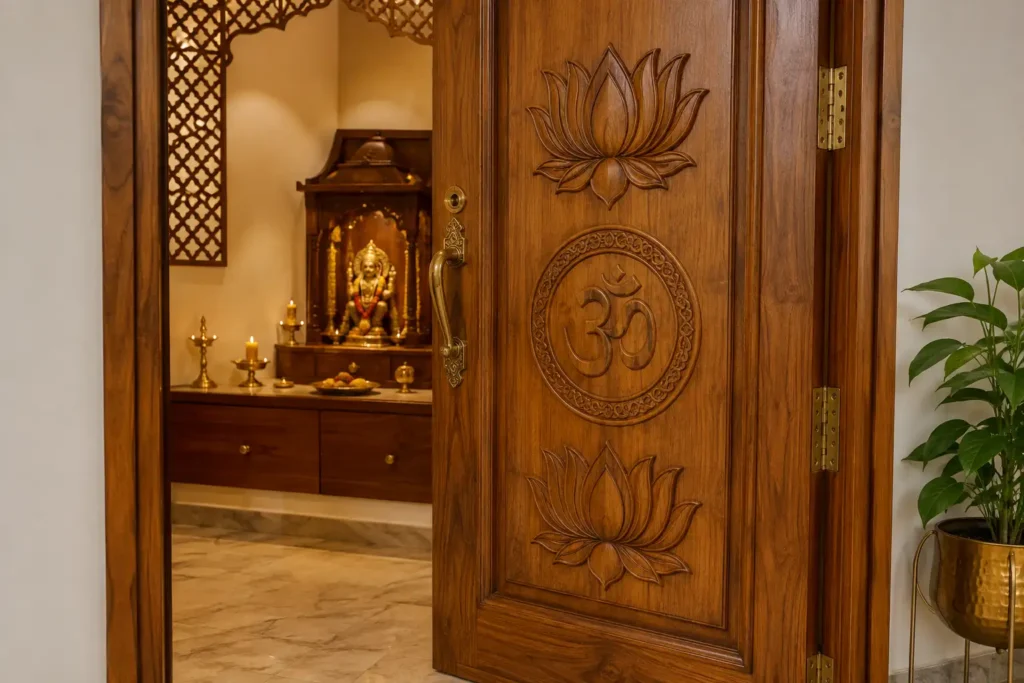
Solid carved doors in teak, Sheesham, or rosewood hold fine detail without splitting apart, which is why lotus motifs and Om symbols are still everywhere in pooja door catalogs. Deep carving looks dramatic once the diyas are lit and shadows sit inside the grooves. It also collects dust in those same grooves, and anything carved deeper than about 10mm tends to chip near the edges after years of daily wear.
If cost is pushing you toward an engineered option instead, our MDF versus particle board comparison covers which one actually survives Bangalore’s humidity, worth a read before your carpenter talks you into a veneer shortcut.

Not sure which wood suits your alcove? Book a free measurement and material consultation before you commit to anything.
How Does Teak Compare to Sheesham for Pooja Doors
Most people ask for teak by name without really knowing why, just because they’ve heard it’s the good one.
Teak is a dense, oil-rich hardwood that resists moisture, termites, and warping, which is exactly what you want in wood that sits near heat and smoke every day. The natural oils in it do most of the work, keeping insects out and slowing down water absorption. It’s the obvious pick for a dedicated mandir room that’s going to see decades of daily use.
Sheesham, sometimes called Indian rosewood, carves with almost the same detail and honestly has a richer, darker grain than teak. Where it can let you down is in very dry, AC-heavy rooms, where it’s more prone to small surface cracks if it wasn’t seasoned properly before the carving started. We used Sheesham over teak on an HSR Layout project a few years back purely to keep costs down, and three years on, the door’s fine, mostly because that room gets natural airflow rather than constant AC.
Grain and Colour Differences
Teak has that golden brown tone that deepens as it ages. Sheesham starts out darker, more reddish brown, and some clients actually prefer that heavier look from day one.
Carving Behaviour
Teak takes crisp, shallow carving well. Sheesham is a touch softer, so if you want very fine filigree work, teak is the safer choice if the budget stretches that far.

What Does a Wood Pooja Room Door Actually Cost
Pooja room design wood pricing swings a lot depending on species, carving depth, and door size, so anything you read here is a starting range, not a quote you can hold anyone to.
Solid teak costs more than Sheesham or veneer, mostly because good teak is harder to source and takes longer to dry properly before it can even be carved. Hand carving pushes the price up further compared to CNC cutting, which is faster and more consistent but loses some of that handmade character. Most clients end up spending more on a dedicated mandir room and less on a small wall-niche door, which makes sense given the size difference alone.
Honestly, get someone to measure your space before you trust a number you saw online. Door width, how deep the carving goes, and whether hardware is included all move the final figure more than any catalog price will tell you.
How Do You Keep a Wooden Pooja Door From Warping
Warping happens when timber absorbs moisture unevenly, usually diya heat pulling at one side of the door while room humidity works on the other. The exposed face expands faster than the back, and over time that mismatch shows up as a visible bow or a door that no longer sits flush. Proper seasoning before installation and a breathable oil finish instead of a sealed lacquer are what actually prevent this.
The Bureau of Indian Standards’ guidance on permissible moisture content for timber is clear that timber used indoors in humid regions needs to be seasoned to a specific moisture range before any joinery work starts, not fitted straight off the sawmill. Some vendors skip this to save a week or two, and that’s usually why a door that looked perfect on delivery day starts cupping within a year.
Here’s something we’ve noticed just from tracking client callbacks over the years. Doors installed against a north or east wall, catching gentler morning sun, almost never warp. West-facing pooja doors that take direct afternoon heat need an oil refresh nearly a year sooner than the rest. You won’t find that detail on any general material spec sheet. It’s just what keeps showing up when you follow up with clients season after season.

Worried your pooja alcove gets too much afternoon sun for solid wood? Request material samples and a quote and we’ll tell you honestly what will and won’t hold up in that spot.
Which Wood Finish Works Best for Small Apartments
Not every home has space for a heavy carved teak panel, and there’s nothing wrong with that.
For a compact 2 or 3 BHK, a flush or lightly carved panel in a lighter wood tone keeps the corner from feeling closed in. Our guide on getting your pooja room design right walks through the layout decisions that should come before the door itself, things like placement and lighting.
Door direction ties into Vastu too, and our Pooja Room Vastu Shastra guide covers which direction the door should ideally face if that matters to your family.

Comparison Table: Teak vs Sheesham vs Wood Veneer
| Material | Cost Level | Durability | Carving Detail | Best For |
| Solid Teak | High | Excellent, 20+ years | Excellent, holds fine detail | Dedicated mandir, long term homes |
| Sheesham | Mid to High | Good, needs periodic polish | Very good | Traditional carved styles on a tighter budget |
| MDF with Wood Veneer | Low to Mid | Moderate, avoid direct diya heat | Good for CNC patterns | Budget pooja corners, rental homes |
The Houzz India Renovation Trends Study found that wood finishes and traditional detailing are still among the most requested elements in Indian home renovations, which lines up with pretty much every pooja room brief that comes through our studio.
A Real Project, and What It Taught Us
A client in Whitefield wanted solid teak for a small pooja alcove that happened to catch direct afternoon sun through a nearby window. We told her upfront it was risky and suggested an oil-based finish instead of the glossy lacquer she’d originally picked out. Eighteen months in, her door hasn’t warped at all. Her neighbour, who went with lacquered teak in a similar spot, is already seeing one edge start to cup. Same wood, different finish, very different outcome.
Expert Tip 1: Ask to see the moisture content reading on your timber before it’s installed, not after. Any carpenter worth hiring will show you this without an argument.
Expert Tip 2: Skip the high-gloss lacquer if your pooja door gets direct sun. A matte oil finish breathes better and holds up against cracking far longer.
“Clients almost always ask which wood looks best. The better question is which wood survives their specific room’s heat and light.” Manish Jain, Founder and Creative Director, Blue Interiors, 2026
Frequently Asked Questions on Pooja Room Door Designs in Wood
Can a wooden pooja door be painted instead of polished?
You can paint it, but it’s not really worth doing on solid teak or Sheesham since that hides the grain you paid extra for in the first place. A stain or oil finish keeps the wood looking like wood while still protecting it.
Does the pooja room door need to face a specific direction?
Direction usually depends on where the room itself sits in the house, not the door material. Our Vastu guide goes into the placement rules in more detail if that’s something your family follows closely.
How long does it take to get a custom wooden pooja door made?
A simple CNC-cut or plain panel door is quicker than a hand carved one, since carving needs extra drying and finishing time that a machine skips entirely. Ask your carpenter for a realistic timeline once the wood and design are locked in.
Is teak better than MDF with veneer for the long term?
For a home you’re staying in for a decade or more, yes. Teak shrugs off moisture and pests without much fuss, while veneer can swell or peel if it sits too close to daily diya heat.
Can an old wooden pooja door be restored instead of replaced?
Often, yes, as long as it’s solid wood and the structure underneath is sound. A sanding and re-oiling session can bring most of the original grain back without needing a full replacement.
Where This Leaves You
Wood pooja room door designs reward patience over impulse buying. Teak makes sense for a dedicated mandir you’re not planning to redo for a decade. Sheesham gets you nearly the same warmth for less money. Veneer works fine as long as it stays clear of direct heat. And the finish you pick matters just as much as the wood species, especially in a room that sees an open flame every single day. See the full range of our interior design services beyond pooja doors as well.
Get Your Wooden Pooja Door Built Right, Not Redone in Two Years
A pooja door is one of the few things in a home that’s genuinely painful and expensive to redo once the carving’s done. Get the wood species, seasoning, and finish right the first time, and you won’t have to think about this door again for years.
Request Material Samples & a Quote and let Blue Interiors bring real teak and Sheesham samples to your home, measure your alcove properly, and give you an honest cost comparison instead of a generic catalog number.
Author Bio
Manish Jain is the Founder and Creative Director of Blue Interiors, with 15 plus years of excellence in luxury residential and commercial interiors. He has personally specified wood and teak pooja room doors across Bangalore homes in HSR Layout, Whitefield, and Sarjapur Road.